
A reliable leak-shutoff setup uses smart sensors placed near appliances, under sinks, and along vulnerable pipes to detect even tiny drips and changes in water pressure. When a leak is detected, automatic shutoff valves respond instantly to prevent flooding, often integrated with home automation systems for remote alerts and control. Regular maintenance and backup power guarantee consistent operation. To discover how to build or improve your system, keep exploring these essential features.
Key Takeaways
- Strategic placement of smart sensors near appliances, under sinks, and vulnerable pipes for early leak detection.
- Reliable shutoff valves that respond instantly to detected leaks and are easy to access manually.
- Integration with home automation systems for remote alerts and automatic water shutoff.
- Backup power sources to ensure system operation during power outages.
- Regular testing and maintenance to ensure sensors and valves function correctly and minimize false alarms.
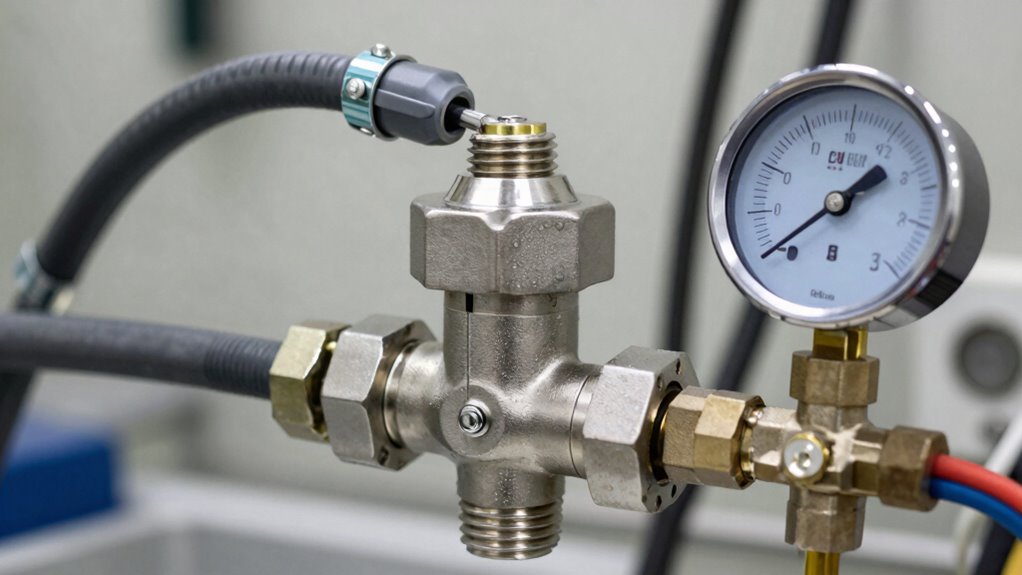
Have you ever wondered how to quickly prevent water damage when a leak occurs? A reliable leak-shutoff setup is your best defense in such moments. It’s more than just installing a valve; it’s about creating an integrated system that detects a leak immediately and responds without delay. Modern setups rely heavily on smart sensors, which constantly monitor your plumbing for signs of trouble. These sensors can detect even tiny drips or changes in water pressure, alerting you instantly and triggering the shutoff mechanism. The key is ensuring these sensors are correctly placed at vulnerable points—near appliances, under sinks, or along pipes prone to corrosion. When a leak is detected, the system’s emergency protocols kick in, shutting off the water supply automatically.
Smart sensors detect leaks early and trigger automatic shutoff for immediate water damage prevention.
A dependable leak-shutoff setup isn’t complete without a well-designed response plan. The emergency protocols should be clearly defined and tested regularly, so you know exactly what happens when a leak is detected. For example, once the sensors pick up abnormal water flow, the system should activate the shutoff valve immediately, preventing water from flooding your space. This rapid response minimizes damage, saves money on repairs, and reduces the risk of mold growth. It’s also smart to integrate these systems with your home automation or security setup, allowing you to receive instant notifications on your phone or email. That way, you’re aware of issues even when you’re away, giving you peace of mind.
In a reliable leak-shutoff setup, the hardware and software work seamlessly together. The sensors need to be sensitive enough to detect leaks early but not so prone to false alarms that they cause unnecessary shutoffs. The shutoff valves should be reliable, easy to operate manually if needed, and installed in accessible locations. It’s important to choose systems with backup power sources, so they function even during power outages. Regular maintenance and testing are essential to keep everything in top shape. When you invest in a thorough setup that combines smart sensors, automatic shutoff valves, and clear emergency protocols, you’re creating a proactive defense against water damage. Incorporating smart home technology can further enhance your system’s efficiency and responsiveness.
Ultimately, a reliable leak-shutoff setup empowers you to act swiftly and confidently. It reduces the stress and potential chaos of unexpected leaks, ensuring your home remains safe and dry. With the right system in place, you’re not just reacting to problems—you’re preventing them from escalating, protecting your property and peace of mind. Additionally, understanding the importance of system reliability can help you select components that perform consistently over time. Recognizing the significance of biodiversity and sustainable practices in home systems can also contribute to a more environmentally-conscious lifestyle.
As an affiliate, we earn on qualifying purchases.
Frequently Asked Questions
How Often Should Leak-Shutoff Systems Be Inspected?
You should inspect your leak-shutoff system at least annually to guarantee sensor calibration remains accurate and valve durability isn’t compromised. Regular checks help you catch potential issues early, preventing leaks and costly damage. During inspections, test the sensors, verify calibration, and examine the valve’s condition. Consistent maintenance keeps your system reliable, ensuring it functions properly when needed most and prolongs its lifespan effectively.
What Are the Common Signs of System Failure?
You’ll notice system failure through signs like frequent false alarms, delayed leak detection, or system malfunctions, indicating compromised system durability. If the leak detection sensors aren’t triggering properly or if there’s inconsistent shutoff performance, these are clear signs the system isn’t working reliably. Regular inspections help identify these issues early, ensuring your leak-shutoff setup maintains its effectiveness and durability, ultimately protecting your property from potential water damage.
Can Leak-Shutoff Setups Be Automated Completely?
Yes, leak-shutoff setups can be fully automated with proper sensor calibration and integrated emergency protocols. You’ll need high-quality sensors that detect leaks early and are regularly calibrated for accuracy. Automated valves then shut off the system instantly upon leak detection, following predefined emergency protocols. This setup minimizes human intervention, ensuring rapid response and reducing potential damage or hazards from leaks. Proper maintenance and testing keep the automation reliable.
What Maintenance Is Required for These Systems?
You need to regularly check sensor calibration to guarantee accurate leak detection, which is essential for safety. Additionally, inspect valve durability to confirm the shutoff mechanisms function properly over time. Keep sensors clean and replace them if they drift out of calibration. Regularly test the system’s response to simulated leaks. These maintenance steps help ensure your leak-shutoff setup remains reliable and ready to act when needed, preventing potential hazards.
Are Leak-Shutoff Systems Compatible With All Fluid Types?
Leak-shutoff systems are like chameleons, adapting to various fluids depending on material compatibility. They’re not universally compatible with all fluid types; some materials may corrode or fail. Always check installation guidelines and confirm the system’s materials suit your specific fluid to avoid mishaps. Properly selecting and installing the right system guarantees reliable shutoff and safe operation, no matter the fluid in question.
Conclusion
A reliable leak-shutoff setup is your fortress against water chaos, standing strong like an unbreakable shield. When every component works in harmony, it’s as if you’ve built a silent guardian watching over your home, ready to spring into action at the first sign of trouble. Trust in its precision and resilience—because in the battle against leaks, a well-designed system isn’t just a safeguard, it’s the heartbeat that keeps your peace of mind alive.