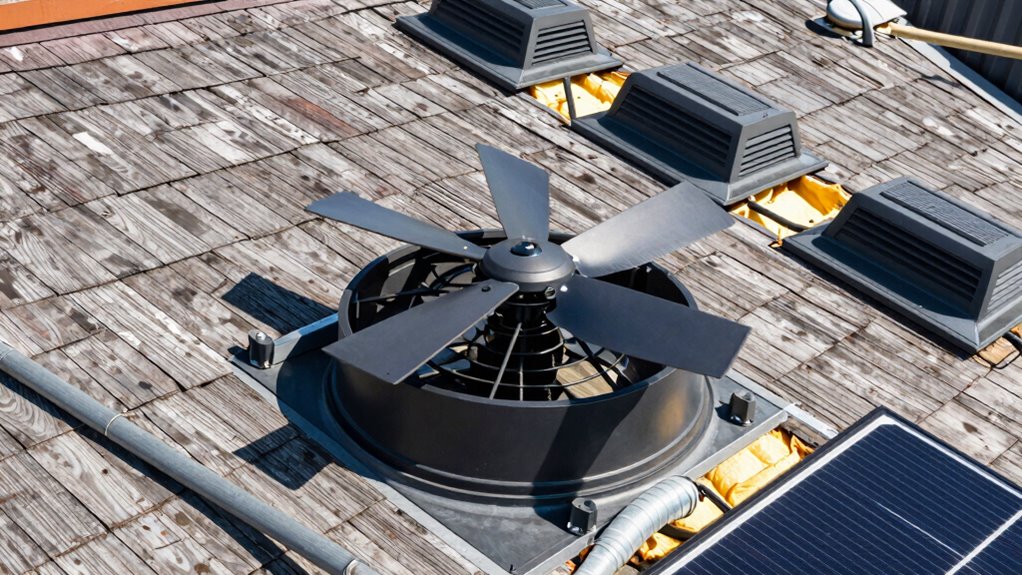

A solar-powered attic fan isn’t the same as improved ventilation because it depends solely on sunlight, making its airflow weather-dependent and inconsistent. It provides only temporary heat reduction and can’t guarantee continuous airflow or ideal attic cooling. Better ventilation systems use multiple components like soffit and ridge vents to maintain steady airflow, regardless of weather. To discover how an extensive system can improve comfort and save you money, keep exploring the options available.

Turn the school run and nap time into listening time
- Thousands of audiobooks, podcasts and originals
- Listen on your phone, tablet or Echo — also offline
- Cancel anytime
Key Takeaways
- Solar-powered attic fans depend on sunlight, limiting their operation during cloudy days or winter.
- They provide only temporary heat reduction and lack continuous, balanced airflow.
- Better ventilation systems include passive vents that work reliably regardless of weather conditions.
- Traditional systems offer sustained airflow, improving energy efficiency and attic temperature regulation.
- Solar fans often have higher initial costs with limited long-term durability compared to comprehensive ventilation solutions.

When it comes to protecting your home from heat buildup, choosing the right attic ventilation method can make a significant difference. Many homeowners consider installing a solar-powered attic fan because it seems like an easy, eco-friendly solution. But before you commit, it’s important to understand why a solar-powered attic fan isn’t the same as opting for better ventilation overall. While these fans can help reduce attic temperature temporarily, they don’t always deliver the comprehensive, long-term benefits you need for optimal energy efficiency.
Choosing the right attic ventilation ensures long-term energy efficiency and consistent home comfort.
A solar-powered attic fan operates using sunlight, which sounds appealing at first. It’s a renewable energy source, so you might think it’s the most cost-effective and environmentally friendly choice. However, when you look at the cost comparison, these fans tend to be more expensive upfront than traditional ventilation methods. Plus, their performance is heavily dependent on weather conditions—on cloudy days or during winter, they simply won’t operate, leaving your attic unventilated. This weather dependency can undermine their ability to effectively regulate attic temperatures year-round.
Better ventilation, on the other hand, involves multiple components working together to provide continuous airflow. Passive vents like soffit and ridge vents, or more advanced systems such as powered attic vents, create a balanced airflow that does not rely solely on sunlight or electricity. These systems tend to be more reliable over time, offering consistent energy efficiency because they operate independently of weather conditions. With proper installation, better ventilation can significantly reduce heat buildup, lower cooling costs, and improve the overall energy efficiency of your home. Additionally, ventilation system durability**** plays a critical role in ensuring long-term functionality and performance, making it a key factor for homeowners considering their options.
When comparing costs, a solar-powered attic fan might seem attractive initially, but you need to consider its limited lifespan and potential maintenance. Over time, the cost of replacing or repairing these fans can add up, making them less economical in the long run. Better ventilation systems, although sometimes requiring a larger initial investment, often pay off through durability, sustained performance, and energy savings. You’ll find that a well-designed ventilation setup minimizes indoor temperature fluctuations, reduces your cooling bills, and extends the life of your roof and insulation. Properly designed ventilation strategies provide consistent airflow, ensuring your home remains comfortable throughout the year.
In the end, choosing better ventilation means prioritizing consistent performance and long-term energy efficiency over quick fixes. While a solar-powered attic fan can be a helpful supplement, it shouldn’t replace a comprehensive ventilation strategy. To truly protect your home from heat buildup, you want a system that’s reliable, cost-effective over time, and capable of providing steady airflow regardless of weather. That way, you’re not just installing a fan—you’re investing in a smarter, more efficient solution for your home’s comfort and energy savings.
Products Worth Considering

Philips Hue Bridge Pro Smart Lighting Hub

Roborock F25 GT Set Cordless Wet Dry Vacuum Cleaner and Mop with 2 Brushes

Blueair Blue Pure 511i Max Smart Air Purifier
As an affiliate, we earn on qualifying purchases.
Frequently Asked Questions
Can Solar Attic Fans Completely Replace Traditional Ventilation Systems?
You can’t rely solely on solar attic fans to replace traditional ventilation systems. While they help reduce attic heat and improve airflow, they don’t provide consistent, thorough ventilation needed to manage moisture and prevent roof insulation damage. To protect your roof insulation and attic insulation effectively, combine solar attic fans with proper soffit vents, ridge vents, and other ventilation methods, ensuring ideal airflow and energy efficiency year-round.
Do Solar-Powered Attic Fans Operate Effectively During Cloudy Days?
Think of solar-powered attic fans like weather vanes—they respond to the sun, not clouds. During cloudy days, cloud coverage dims their efficiency, much like a flashlight in the fog. As a result, fan efficiency drops, and they may not vent your attic effectively. You should consider backup ventilation options for cloudy days to guarantee your attic stays properly ventilated, regardless of the weather.
What Maintenance Is Required for Solar Attic Fans Over Time?
You should perform regular maintenance on your solar attic fan to guarantee it runs smoothly. Check the maintenance schedules recommended by the manufacturer, typically twice a year, to clean the solar panels and inspect the fan components. Over time, component durability might decline, so replace worn-out parts promptly. Keep the fan blades free of debris, and ensure the wiring remains intact, helping your solar attic fan operate efficiently for years.
Are Solar Attic Fans Suitable for All Climate Zones?
Solar attic fans aren’t suitable for all climate zones. In humid areas, they can help reduce indoor humidity by improving attic ventilation, but in colder or very wet climates, they might not be effective and could even impact roof durability if not properly installed. You should evaluate your climate and roofing conditions to determine if a solar attic fan will improve ventilation without risking damage or moisture issues.
How Do Solar Attic Fans Impact Overall Energy Savings?
Coincidentally, installing a solar attic fan boosts your energy efficiency by reducing the need for air conditioning, leading to noticeable savings. You’ll cut energy costs compared to traditional ventilation methods, as it harnesses free solar power. This cost comparison shows long-term benefits, helping you save money while maintaining a cooler attic environment. Overall, solar attic fans lower your energy bills and promote a more eco-friendly home.
Conclusion
While a solar-powered attic fan may seem like a shining beacon of energy efficiency, it’s just one star in the vast constellation of proper ventilation. Think of it as a single brushstroke on a grand canvas; it can’t capture the full masterpiece of airflow and moisture control. To truly safeguard your home, you need a well-orchestrated ventilation system—like a symphony—that harmonizes all elements, ensuring your attic breathes freely, day and night.