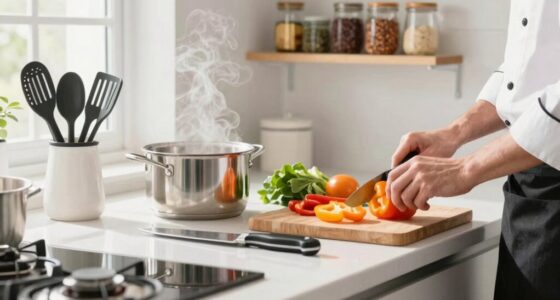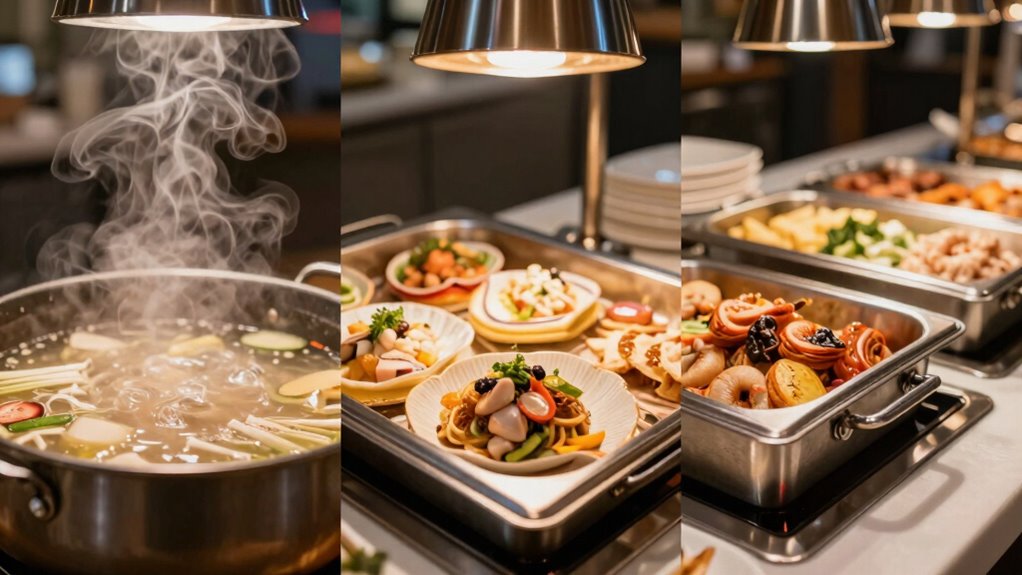

Reheating, warming, and holding serve different food safety purposes. Reheating involves quickly raising cooked food to over 165°F (74°C) to kill bacteria, ensuring safety before serving. Warming gently raises food to a desirable eating temperature without exceeding safe limits. Holding keeps food at a steady, safe temperature after cooking to prevent bacteria from growing. Understanding these differences helps you keep your food safe and tasty, and you’ll discover more about proper techniques ahead.

Turn the school run and nap time into listening time
- Thousands of audiobooks, podcasts and originals
- Listen on your phone, tablet or Echo — also offline
- Cancel anytime
Key Takeaways
- Reheating involves quickly raising cooked food to >165°F (74°C) to ensure safety and kill bacteria.
- Warming gently increases food temperature for serving, usually below reheating temperatures, without necessarily reaching safety thresholds.
- Holding maintains food at a safe, steady temperature after cooking or warming to prevent bacterial growth.
- Reheating focuses on safety and even heat distribution, while warming emphasizes serving temperature and holding ensures ongoing safety.
- Proper temperature control during all three processes preserves food safety, quality, and prevents bacterial proliferation.
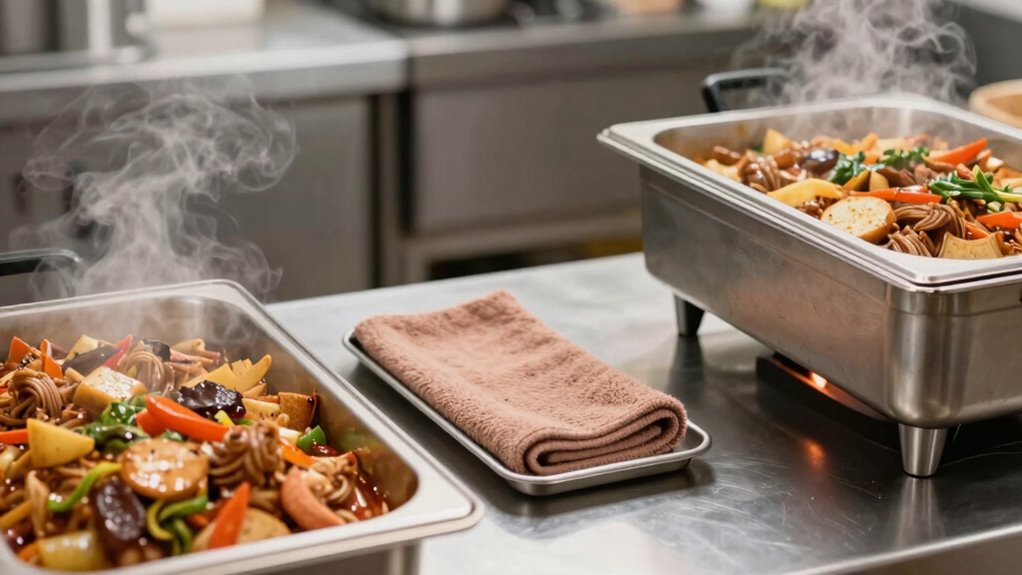
Have you ever wondered how to safely reheat, warm, or hold food without compromising its quality or safety? Understanding the difference between these processes is *essential* to maintaining food safety and proper temperature control. Reheating involves bringing previously cooked food to a safe internal temperature, usually above 165°F (74°C), to eliminate any bacteria that may have grown during storage. Warming, on the other hand, generally refers to the process of gently raising the temperature of food to serve it at a desirable eating temperature, often below the high temperatures used in reheating. Holding means keeping food at a safe, consistent temperature after it has been cooked or warmed, preventing bacterial growth until it’s served or consumed. Proper temperature control is crucial to prevent the danger zone where bacteria can multiply rapidly. When you reheat food, your main focus should be on achieving the right temperature quickly and evenly. If you don’t reach that *vital* 165°F mark, bacteria can survive and multiply, risking foodborne illnesses. Use a food thermometer to check the internal temperature, and stir or rotate food during reheating to ensure even heat distribution. This process is *imperative* for leftovers, cooked meats, or prepared dishes that need to be brought back to a safe temperature before serving. Additionally, understanding proper reheating techniques can help preserve both the food’s texture and flavor, so avoid overheating, which can lead to dry or burnt dishes. Maintaining an appropriate holding temperature during storage is also key to preventing bacterial growth and ensuring food safety over time. Knowing how to properly temperature regulate food also helps maintain its quality during the holding process. It’s important to regularly monitor and adjust temperatures to prevent temperature fluctuations that could compromise safety and freshness.
As an affiliate, we earn on qualifying purchases.
Frequently Asked Questions
What Are the Safety Risks Associated With Improper Reheating?
Improper reheating can risk food contamination and temperature abuse, making you vulnerable to foodborne illnesses. If you don’t heat food evenly or to the right temperature, bacteria like Salmonella or Clostridium perfringens can survive and grow. Always reheat thoroughly, reaching at least 165°F, to prevent these risks. Failing to do so compromises food safety, potentially leading to illness and health issues.
How Do Different Foods Affect Reheating and Holding Times?
Reheating and holding times are like baking a cake—you need to take into account each ingredient’s nature. For example, dense foods like stews need longer, while delicate items like seafood require gentler reheating to preserve food texture and flavor retention. Foods high in moisture reheat faster, whereas drier foods take longer. Adjust times accordingly to avoid drying out or uneven heating, ensuring your leftovers remain tasty and safe to eat.
Can Reheating Affect the Nutritional Value of Food?
Reheating can affect the nutritional value of food by causing nutrient degradation, especially if done improperly or at high temperatures. You might lose some nutritional retention, like vitamins sensitive to heat, light, or oxygen. To minimize this, reheat food evenly and avoid excessive temperatures. Proper reheating helps preserve as many nutrients as possible, ensuring your meal remains nutritious and healthy.
What Equipment Is Best for Maintaining Proper Holding Temperatures?
You should opt for equipment with excellent thermal insulation to maintain proper holding temperatures effectively. Steam tables, heated cabinets, and bain-maries are ideal choices, offering consistent temperature stability. These tools prevent temperature fluctuations that could compromise food safety. While it might seem coincidental, selecting equipment designed for precise heat control guarantees your food stays at safe, quality-preserving temperatures throughout service, safeguarding both taste and safety.
How Do Reheating, Warming, and Holding Impact Food Quality Over Time?
Reheating, warming, and holding can all impact food quality over time, especially regarding food texture and flavor retention. When you reheat food, it might lose some moisture or develop a different texture, while warming ensures it stays at the right temperature without significant quality loss. Holding food too long can cause it to dry out or become overcooked, diminishing flavor and texture. Proper techniques help maintain ideal quality.
Conclusion
Understanding the difference between reheating, warming, and holding is like knowing the gears in a well-oiled machine—you can keep everything running smoothly. Reheating jumpsstart your food, warming gently brings it to the right temp, and holding keeps it safely at that temperature. When you master these steps, your meals stay fresh and safe, like a symphony playing in perfect harmony. Now, you’re ready to serve up dishes with confidence and precision.
Fall Picks
fall essentials
As an affiliate, we earn on qualifying purchases.