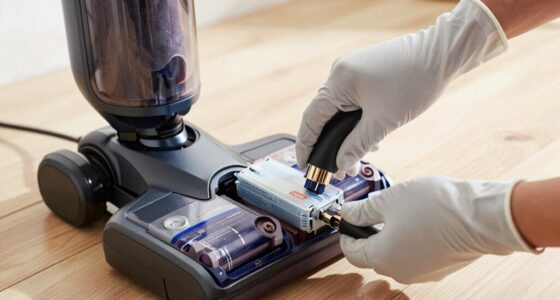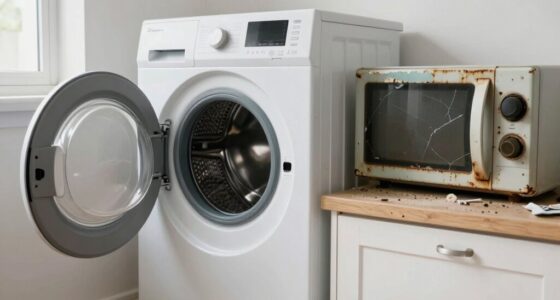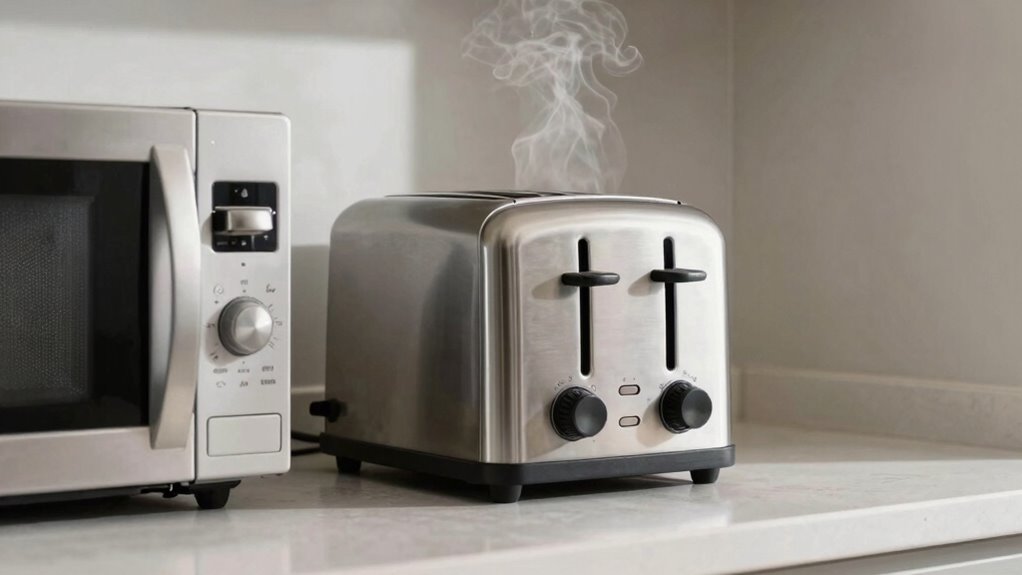

Most appliance odors are harmless and result from everyday use, like food spills, dust, or moisture, which clean up easily. However, if the smell lingers, worsens, or is chemical or burnt plastic, it could signal a serious problem like electrical issues or a malfunction that needs immediate attention. Pay attention to these warning signs to stay safe. Curious to know how to tell the difference? Keep exploring to learn more.

Turn the school run and nap time into listening time
- Thousands of audiobooks, podcasts and originals
- Listen on your phone, tablet or Echo — also offline
- Cancel anytime
Key Takeaways
- Mild, temporary smells from food residue or dust are usually harmless and resolve with routine cleaning.
- Persistent or worsening odors, especially chemical or burning smells, may indicate serious electrical or mechanical issues.
- Odors caused by residual moisture or mold can be harmless if properly cleaned but become problematic if left unaddressed.
- Unusual or strong smells like burnt plastic or sulfur should prompt immediate inspection to prevent safety hazards.
- Regular maintenance and prompt attention to warning signs help distinguish harmless odors from those signaling potential danger.
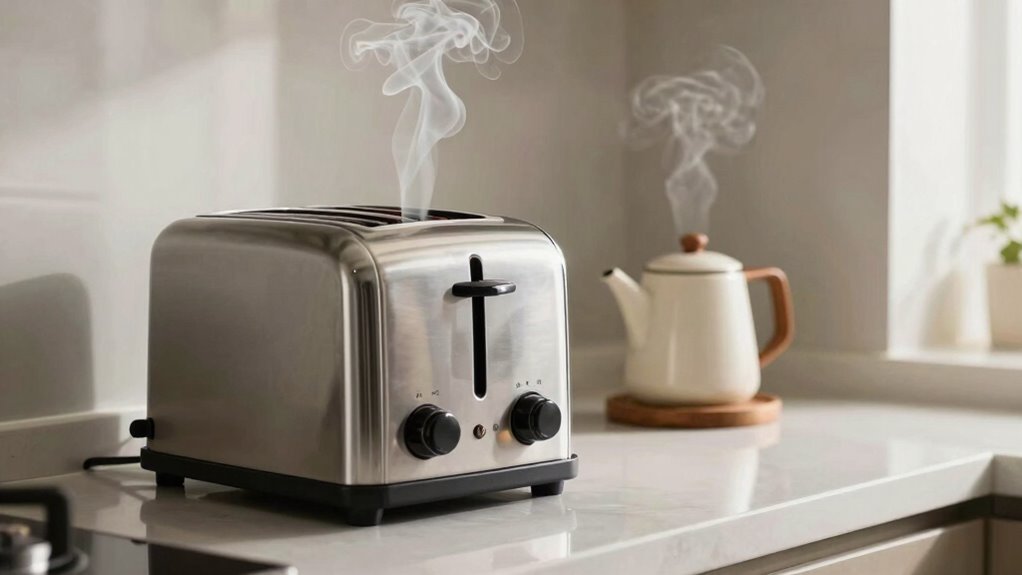
Have you ever noticed a strange smell coming from your appliances and wondered if it’s something to worry about? Many appliance odors come from simple odor sources like food spills, dust buildup, or residual moisture. For instance, a musty smell from your washing machine could stem from trapped mold or mildew. A burning odor from your oven might signal food debris or grease that’s burned onto heating elements. Usually, these odors are harmless and can be eliminated with basic cleaning. However, it’s essential to pay attention, because not all smells are benign, and ignoring warning signs can pose safety precautions.
When you detect a persistent or unusual odor, it’s smart to contemplate safety precautions. For example, a chemical or burning smell could indicate electrical issues or overheating components. In these cases, you shouldn’t delay troubleshooting. Turn off the appliance immediately and unplug it if possible. Continuing to use an appliance with a strange smell might lead to short circuits, fires, or other hazards. Be cautious around appliances that emit smoke, unusual sparks, or a strong plastic-like smell, as these are clear signals of potential danger. In such situations, it’s better to contact a professional technician to inspect and repair the device rather than trying to fix it yourself. Recognizing electrical safety hazards can prevent accidents and damage. Additionally, understanding appliance warning signs can help you identify problems early before they escalate.
Understanding odor sources helps you determine whether an appliance odor is harmless or a warning sign. Mild, fleeting smells often originate from normal use: food particles in a dishwasher, grease on a stove, or dust in an air vent. Regular cleaning and maintenance usually resolve these issues. It’s also helpful to understand common odor sources to better identify potential problems early. Recognizing odor indicators can aid in diagnosing issues before they become critical. Being aware of early warning signs can help prevent costly repairs or safety hazards. On the other hand, odors that linger or intensify, especially those resembling burnt plastic, sulfur, or chemicals, should never be ignored. These are often linked to malfunctioning parts or electrical problems that could escalate into more serious safety concerns. If you suspect an appliance is malfunctioning, don’t hesitate to ponder the manufacturer’s guidelines or call in a qualified technician to assess the situation.
As an affiliate, we earn on qualifying purchases.
Frequently Asked Questions
How Can I Identify a Dangerous Appliance Odor?
You can identify a dangerous appliance odor by paying attention to unusual scent indicators, like a burning or rotten smell. Check odor sources closely—overheating components, melting plastic, or burnt wiring often emit these warning scents. If the odor persists or intensifies, turn off the appliance immediately and inspect for signs of damage. Don’t ignore strong or strange odors, as they often signal potential hazards like electrical fires or component failures.
Are There Specific Appliances More Prone to Harmful Odors?
Certain appliances, like refrigerators, dishwashers, and washing machines, are more prone to harmful odors due to their moisture and food residue, which can impact your air quality. These odor sources often develop mold or bacteria if not cleaned regularly. You should stay alert for musty, sour, or chemical smells from these appliances, as they may indicate dangerous conditions. Regular maintenance helps keep your air quality safe and odors harmless.
What Immediate Steps Should I Take if I Smell a Burning Odor?
If you smell a burning odor, act immediately—don’t ignore it. According to safety experts, over 70% of appliance fires start with electrical issues. Start with DIY troubleshooting by unplugging the appliance and inspecting for visible damage or debris. Use odor removal techniques like airing out the space and cleaning vents. If the smell persists or you see smoke, turn off power and call a professional. Safety always comes first.
Can Regular Maintenance Prevent Harmful Appliance Odors?
Yes, regular maintenance can prevent harmful appliance odors. You should routinely replace or clean your air filter to reduce dust and mold buildup, which can cause unpleasant smells. Additionally, maintaining your ventilation system guarantees proper airflow, preventing stale air and odors from lingering. Regularly inspecting and cleaning appliance vents and filters helps keep your home smelling fresh and safe, avoiding potential health risks associated with neglected appliances.
When Should I Call a Professional for Appliance Odors?
When that strange, sour smell invades your space like an unwelcome ghost, it’s time to call in a pro. Don’t ignore safety precautions—foul odors often hide deeper issues like mold or electrical problems from odor sources. Trust a professional to uncover hidden dangers, ensuring your home stays safe. If odors persist despite your cleaning efforts, it’s a clear sign that expert help is needed to prevent potential hazards.
Conclusion
Remember, not all odors are cause for alarm—sometimes, they’re just part of the process. But don’t ignore persistent or strange smells; they could signal a problem. Trust your nose and stay vigilant, because a stitch in time saves nine. When you catch odors early, you can prevent bigger issues down the line. Keep your appliances clean and your senses sharp—after all, an ounce of prevention is worth a pound of cure.
Cold & flu season Picks
humidifiers
As an affiliate, we earn on qualifying purchases.